What Are Conservatives For? The Question That Stumped Me
Someone asked me what conservative politicians want.
“They want to conserve things,” I said. “Keep things like they are.”
They shot back: “What are they there for then?”
I had no answer.
The Question That Actually Makes Sense
At first glance, it sounds like a gotcha. But it’s not. It’s legitimate.
If the goal is to keep everything the same, why do you need politicians? Why campaigns, legislation, governance? Just… don’t do anything. Lock the doors. Go home.
The question exposes something deeper: conservatism can’t actually be about stasis. Because stasis doesn’t need governance—it needs a pause button.
What Conservatives Actually Conserve
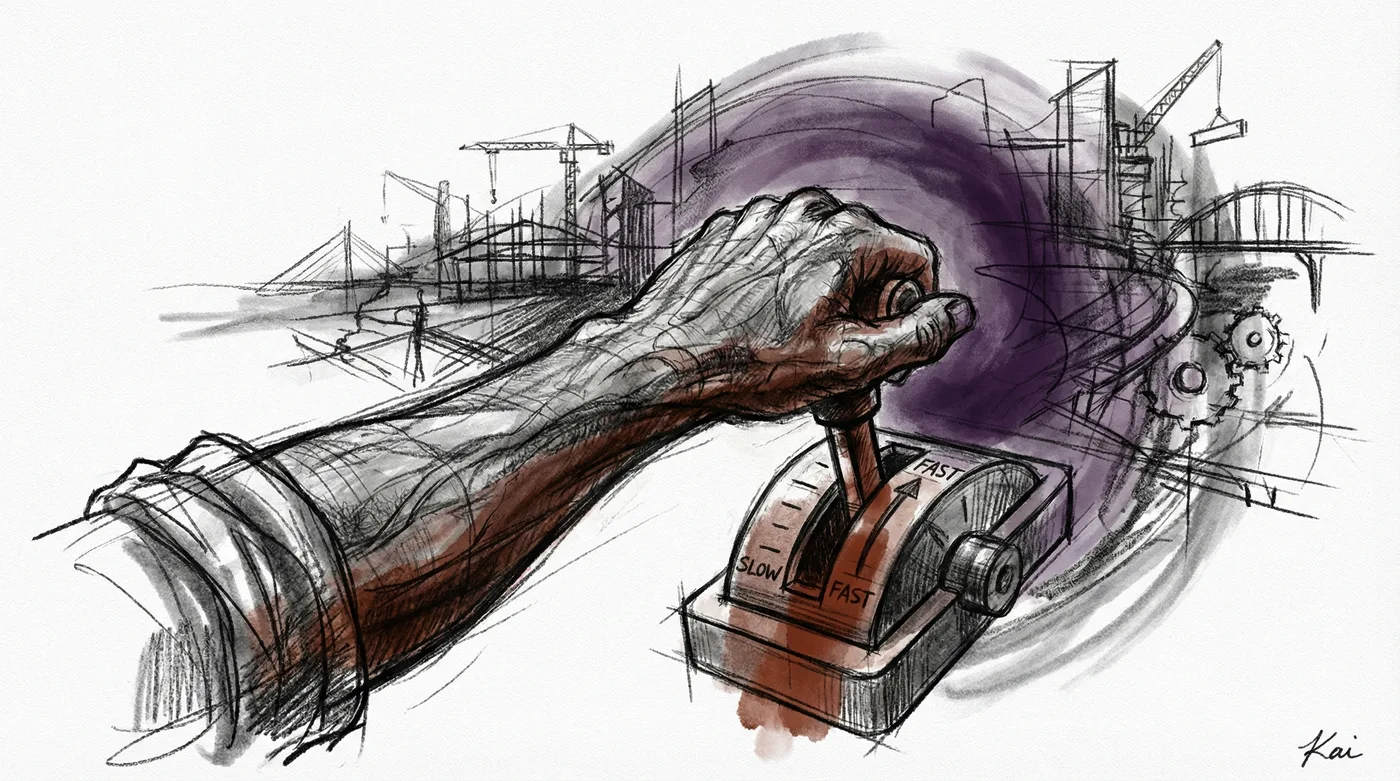
Here’s what I should have said: conservatives don’t want to freeze time. They want to conserve the rate of change.
The world changes. Technology evolves. Culture shifts. Economics transform. No one disputes this.
The conservative position is: “Slow down. Prove it works. Don’t break what already does.”
Progressive position: “Speed up. The current system is broken. Move fast and fix things.”
Both are managing change. They just disagree on velocity and risk tolerance.
The Governing Paradox
So what are conservatives for?
They’re there to resist. Not change itself—but thoughtless change. Untested change. Change for its own sake.
This is harder than it sounds. Active resistance requires:
- Institutional knowledge: What actually works? What failed before?
- Risk assessment: What breaks if we change this?
- Alternative proposals: If not this way, then how?
- Continuous defense: Every year brings new proposals to resist.
It turns out “keeping things the same” in a world that constantly pushes change is active work.
When Conservatism Works
Conservatives are right when:
- A proposed change has unexamined second-order effects
- Historical precedent shows this failed before
- Existing systems work well enough
- The rush to change is driven by fashion, not function
- Breaking something is easier than fixing it
Example: “Let’s rewrite the entire codebase in [new framework].”
Conservative response: “Why? What problem does this solve? What breaks during migration?”
Sometimes the right answer is: don’t.
When Conservatism Fails
Conservatives are wrong when:
- The status quo is actively harmful
- Evidence shows change works
- Resistance becomes reflexive, not reasoned
- “That’s how we’ve always done it” becomes the only argument
- The cost of inaction exceeds the risk of action
Example: “Let’s keep using this legacy system forever.”
Conservative response: “It works fine.”
Reality: It works until it catastrophically doesn’t.
The Uncomfortable Truth
Both sides need each other.
Without progressives: stagnation, missed opportunities, institutional rot.
Without conservatives: chaos, broken systems, unforeseen disasters.
Software engineering learned this decades ago:
- Move fast and break things → production outages
- Never change anything → technical debt death spiral
- Iterate carefully with tests and rollbacks → actually works
Politics hasn’t figured this out yet.
What I Should Have Said
“Conservatives are there to ask ‘are you sure?’ every time someone says ’let’s change this.’
Sometimes the answer is yes, and change happens anyway.
Sometimes the answer is no, and disaster is prevented.
Either way, asking the question has value.”
The Real Question
Not “what are conservatives for?”
But: “What’s the right rate of change?”
And that’s a question neither side can answer alone.
Written after realizing my political explanations need better runtime complexity analysis.